
Content
When pairing socks after washing, they just don’t seem to match—some lean to the left, others to the right. When you force them onto your feet, your toes feel somewhat off, as if your big toe is being squeezed.
At times like this, you might wonder: Do socks actually have a left and a right?
The answer is: yes and no.
Traditional cotton socks and no-show socks are identical for left and right—you can wear them on either foot. But better-quality socks do indeed come in left and right versions.
Socks that distinguish left from right usually have the following features:
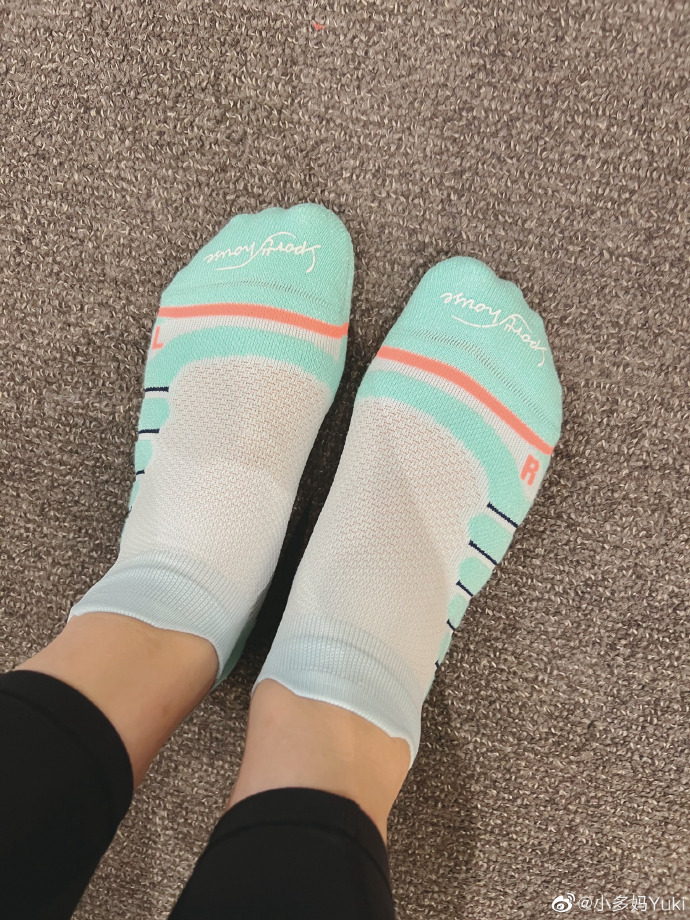
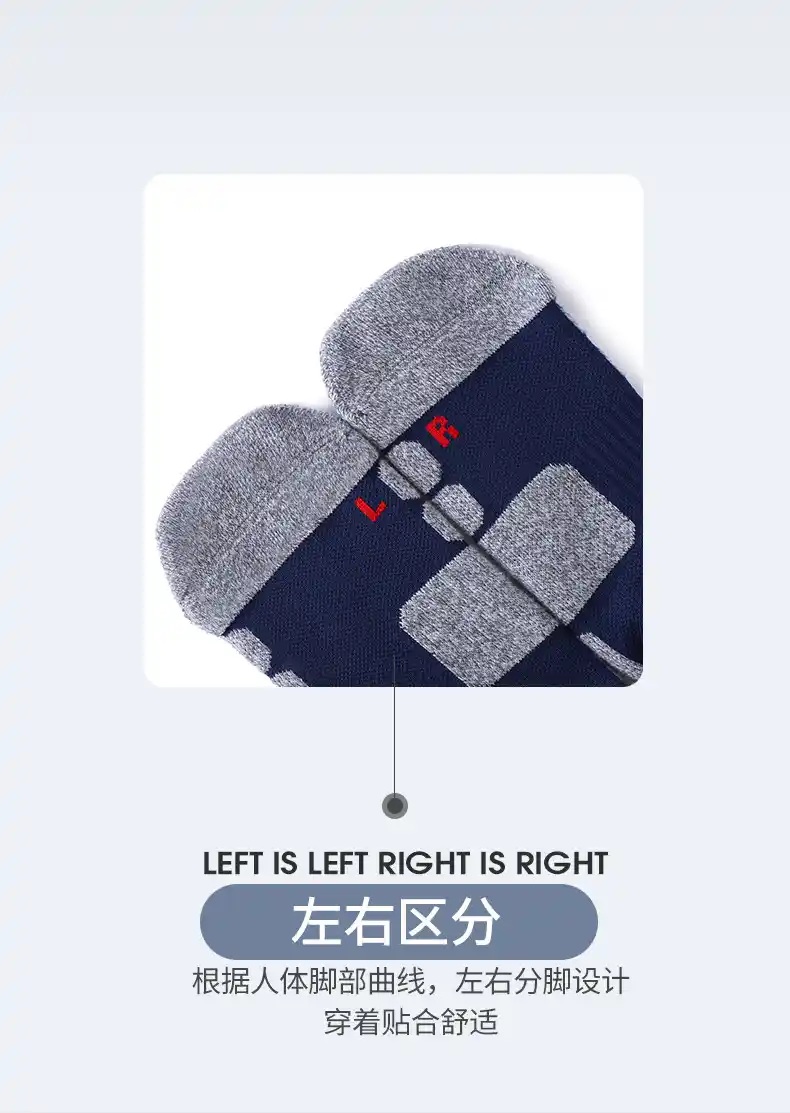
“L” and “R” markings at the heel
Turn the sock opening inside out and look at the heel—you’ll see small “L” (Left) and “R” (Right) knitted in. This is the manufacturer’s intentional design for left and right feet.
An angled design at the toe
Human toes are not lined up straight; the big toe is longest, forming a natural sloping curve. Left-right specific socks are cut and knitted along this curve, giving each toe its own “designated space.”
The reason is simple: cost.
Socks that are identical for both feet can be made from a single mold and pattern, and inventory management is easier. Besides, stretchy fabric fits most foot shapes—most people won’t notice much difference unless they pay close attention.
But the trade‑off is compromise.
The big toe gets squeezed inward over time, extra fabric bunches up at the toe box, and both comfort and fit are compromised.
First‑time wearers often pause in surprise.
It feels like: “So this is how freely my toes can spread?” The big toe is no longer nudged toward the center, and the little toe has its own place. When walking, the socks don’t twist or slip, and the fit between toes and fabric is just right.
It’s like switching from “one‑size‑fits‑all shoes” to “custom‑made shoes”—you don’t know what you’re missing until you try them, and once you do, you never go back.
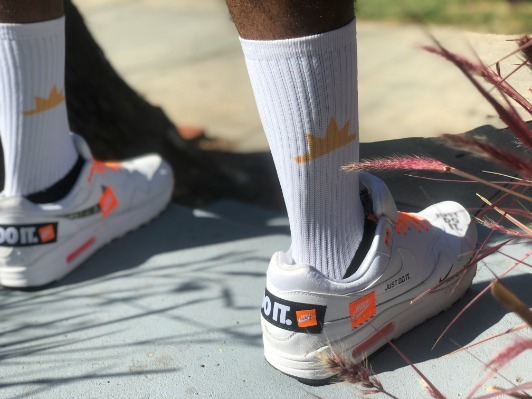
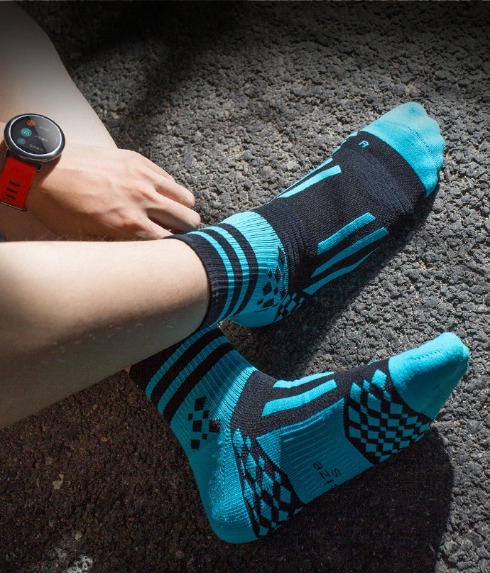
Sports socks, running socks, and five‑toe socks—almost all are independently designed for left and right.
Running socks: Asymmetrical knitting; thicker cushioning at the toe and extra abrasion‑resistant fabric at the big toe.
Compression socks: Pressure distribution differs between left and right; the left sock reinforces the outer side, the right sock supports the inner side.
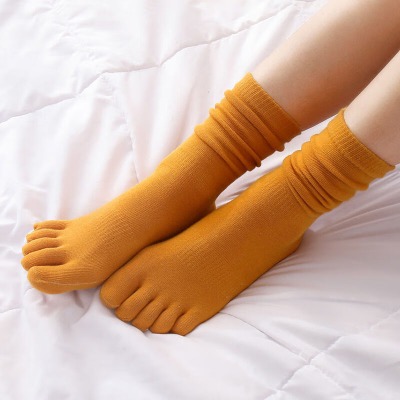
Five‑toe socks: Each toe has its own “room”—it’s impossible to wear them without left‑right differentiation.
Wool socks and outdoor hiking socks are also mostly left‑right specific. In cold environments, a snug fit means better warmth retention.
Remember one rule: L on the left, R on the right, with the angled toe pointing toward your big toe.
If you accidentally put them on the wrong feet, your toes will feel twisted toward the center, and a bulge will appear at the toe box. Just take them off and swap feet.
When washing, don’t pair the left and right socks together for drying. Dry them separately or clip each with a laundry clip, so you can grab a matching pair next time.
Whether socks come in left and right ultimately comes down to whether you’re willing to compromise.
Socks that don’t distinguish left from right are wearable. Left‑right specific socks are more comfortable.
Life’s little pleasures often hide in such details—a pair of socks that fit your feet perfectly, a pillow that supports your neck just right, a kitchen knife that feels good in your hand…
If you’ve never worn left‑right specific socks, why not give them a try?
After all, your feet carry you so many miles every day—they deserve to be treated well.
Do your socks come in left and right?
NO. WSD1306 Size EU35-39 Age Adu...
View More
NO. WSD1523 Size EU35-39 Age Adu...
View More
NO. WSD1743 Size EU35-39 Age Adu...
View More
NO. WSD1143 Size EU35-39 Age Adu...
View More
NO. WSD1301 Size EU35-39 Age Adu...
View More
NO. WSD1421 Size EU35-39 Age Adu...
View More

+86-13586371153
+86-0573-87670680
[email protected] [email protected]
8-1 Yongsheng Road, Qianjiang Industrial Park, Dingqiao, Haining, Zhejiang, PRC
Copyright © Haining Wanshida Hosiery Co.,LTDAll Rights Reserved. China Custom Socks Manufacturers