
Content
A man buys a six-pack of bamboo socks, loves them for the first week, and three months later they are sagging at the ankle and paper-thin at the heel. Another man wears the same style of sock almost daily for a year and replaces them only because he wants new colors. Both products were labeled bamboo socks. The difference is not the label. It is the fiber blend, the knit density, the way the toe is closed, and how much elasticity the yarn actually contains. If you are shopping for men's bamboo socks, the short version is this: look for at least 60 percent bamboo content, a reinforced heel and toe, and a flat toe seam. Get those details right, and bamboo socks are among the most comfortable everyday socks a man can wear.
Most bamboo socks on the market are made from bamboo viscose, also called bamboo rayon. The bamboo stalk is pulped, dissolved, and regenerated into a fiber that is then spun into yarn. Three properties make that yarn genuinely useful in a sock:
Men who switch from 100 percent cotton to a well-made bamboo blend usually notice the difference within the first day: less clamminess, less smell, and no stiff fabric rubbing the heel. That is why bamboo has become a default choice for warm weather, long shifts, and active days.
Here is where a lot of buying mistakes happen. Bamboo fiber is a processed fiber, and the term bamboo sock has no legal definition. A sock that is 30 percent bamboo and 70 percent polyester can still be sold as a bamboo sock, and it will not perform like one.
The useful range for men's everyday socks is roughly 60 to 80 percent bamboo viscose, with the balance made up of cotton or nylon for strength and elastane for stretch recovery. Below 50 percent bamboo, you are mostly paying for the label. Above 80 percent, the sock feels luxurious but tends to stretch out and wear thin faster, because bamboo viscose is not as abrasion-resistant as cotton or nylon.
Blends are also how manufacturers control price. If a sock is unusually cheap, check the composition before trusting the softness claims. If you want a broader framework for matching socks to your wardrobe, this guide to choosing the perfect men's socks for every occasion explains how different blends and lengths behave in daily use.
Take a pair through this checklist before you buy. It takes less than a minute and filters out most of the disappointment.
| Check | What to look for | Why it matters |
|---|---|---|
| Fiber blend | 60-80% bamboo viscose, 10-30% cotton or nylon, 5-10% elastane | Too little bamboo kills breathability and odor control; too much reduces durability |
| Knit density | 168-200 needles, tight and even structure | A denser knit holds its shape longer and feels smoother |
| Toe seam | Hand-linked, flat, or seamless toe | A bulky seam causes irritation and wears into holes faster |
| Heel and toe reinforcement | Terry loops or a reinforced weave in high-wear zones | Reinforcement is what keeps a sock alive past six months |
| Cushioning | Terry under the heel and ball of the foot | Adds comfort and absorbs impact on hard floors |
The difference between a good bamboo sock and a mediocre one is usually visible if you know what to look at. A 200-needle knit is denser and smoother than a 168-needle knit, and it wears longer because each loop carries less stress. Terry cushioning under the heel and ball of the foot absorbs impact, which matters if you stand on concrete or walk a lot. A hand-linked toe seam is flat enough to be invisible inside a shoe, while a chain-stitched seam can rub the toes raw by mid-afternoon.
The fastest way to ruin a soft sock is to put a thin heel in it. The heel is where the shoe flexes and where the fabric takes the most abrasion. The best bamboo socks for men double the yarn in the heel or carry a terry loop up the back of the leg. The toe gets the same treatment in most well-made pairs. If a sock has visibly thinner fabric at the heel and toe, no fiber blend can save it from an early hole.
Bamboo socks come in the same lengths as any other sock, and the right choice depends on the shoe and the occasion, not on the fiber.
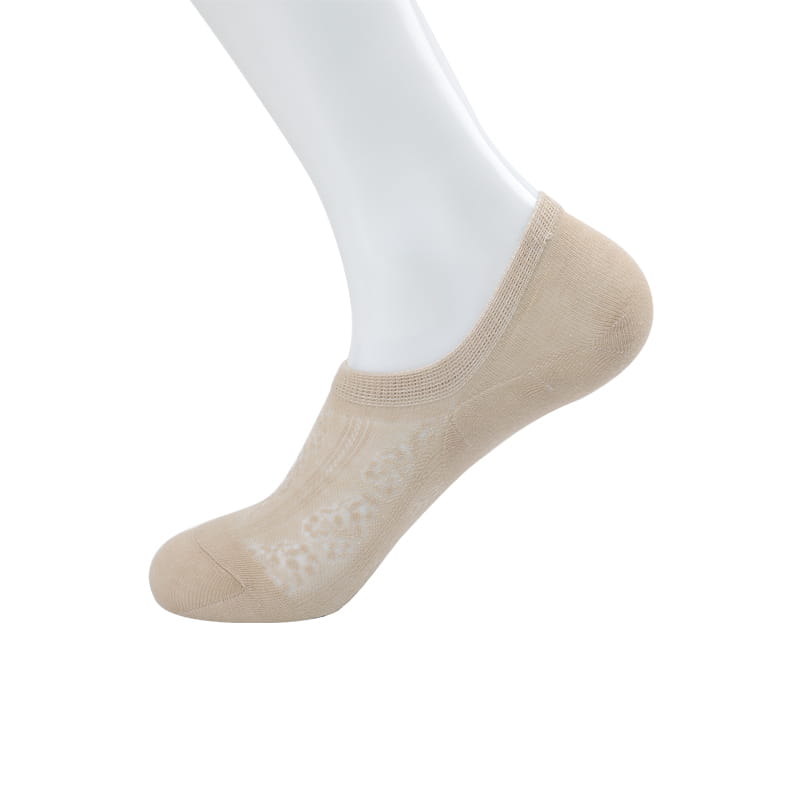
If you wear loafers or low-top sneakers and want the barefoot look without the barefoot problems, a no-show or low-cut bamboo sock is the answer. Look for a thin profile that does not bunch under the arch, and a heel tab or silicone grip if you have trouble with socks sliding down. An ultra-thin bamboo fiber back-color boat sock is a good example of the low-profile style: it disappears inside the shoe while still giving you the moisture control and softness of bamboo.
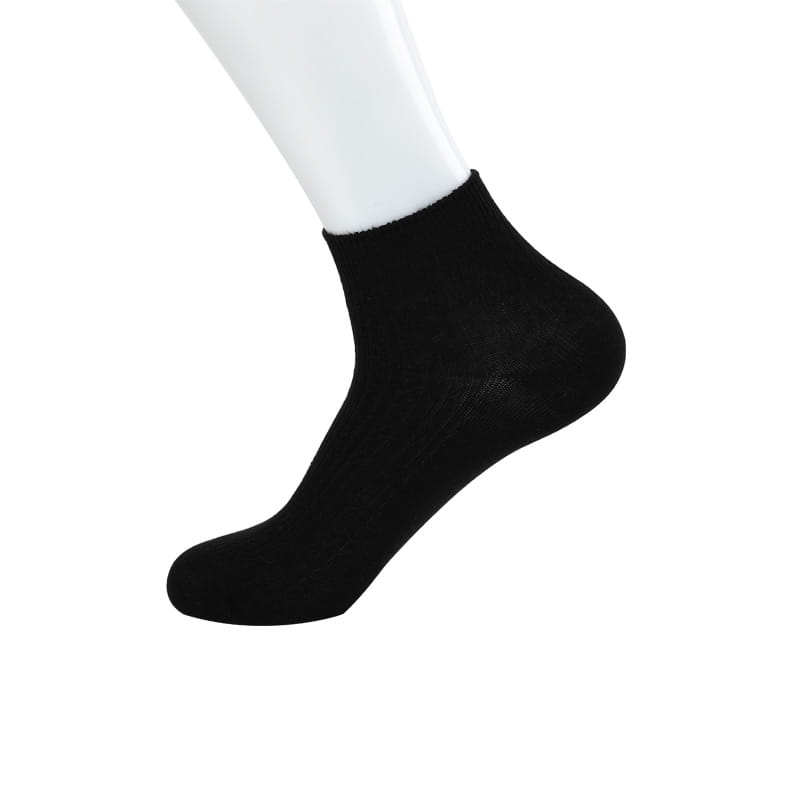
Ankle socks are the most versatile length for men. They work with casual shoes, trainers, and most boots, and they give you enough fabric to add cushioning without feeling heavy. If you have ever had a sock slip down and rub the back of your shoe, choose a style with an anti-chafe tab and a hand-sewn toe. This ultra-thin bamboo fiber sock with an anti-chafe tab is built exactly that way, which makes it a solid choice for long walks and office days alike.
A crew or quarter sock covers the ankle and most of the calf, which makes it the right tool for boots, jeans, and anything outdoors. In a bamboo blend, a crew sock keeps its softness while adding coverage for colder days. Men who size up for hiking or work boots should look for extra terry cushioning in the sole.
Dress socks are where bamboo earns its reputation. Most formal socks are made of thin synthetic or tightly spun cotton, and both trap heat. A bamboo or bamboo-cotton dress sock gives you a refined look with the breathability that keeps your feet dry under a suit. If you need a customized design, logo, or low minimum order for a uniform or a brand, a custom bamboo cotton dress sock is worth considering.
Bamboo viscose is a soft fiber, but it is not a springy one. The recovery in a bamboo sock comes from the elastane content, and this is the number that determines whether the sock stays up by 5 p.m. A good everyday sock contains 5 to 10 percent elastane. Less than that, and the sock stretches at the ankle and slides down. More than that, and the sock squeezes the calf and traps heat.
Sizing also deserves more attention than it gets. Bamboo viscose shrinks more than cotton when washed hot or dried on high heat, so buy socks by the European size range on the label rather than a vague S, M, or L, and wash them in cold water. If a sock fits snugly when new, that is usually correct, because bamboo softens and relaxes slightly with wear.
As for lifespan, a properly constructed bamboo sock in a good blend lasts roughly six to twelve months of regular rotation. When the heel feels papery, the elastic no longer recovers, or the toe thins out, it is time to replace them. Following the best practices for washing and caring for socks will extend that window considerably, because heat and fabric softener are the two fastest ways to age a bamboo sock.
If you are sourcing bamboo socks for resale, a uniform program, or a private label, the supplier's production process matters more than the product photography. Ask a potential partner about yarn sourcing, needle count, shrinkage testing, and color fastness. A serious manufacturer will answer in numbers rather than adjectives.
In our own factory in Haining, China, we have manufactured bamboo and bamboo-blend socks for export markets since the early 2000s. Our bamboo yarns are knit on computerized machines with densities from 168 to 200 needles, and every production batch is inspected before packing. Buyers who come to us with a custom design typically start with a sample, confirm the blend and fit, and then scale up with a minimum order that fits their budget.
Whatever your order size, the checklist in this article still applies. Confirm the bamboo percentage in writing, request a wash test at the temperature your customers will use, and ask for the shrinkage data before you commit to a bulk price.
Bamboo socks for men are a simple purchase with a wide performance range. Fiber content and knit construction decide whether you get a pair that is soft, dry, and durable, or a pair that is soft for a week and shapeless after a month. Check the blend, verify the heel and toe, wash them cold, and you will not want to go back to ordinary cotton. If you want to compare options across lengths and styles before deciding, the full men's sock collection is a good place to start.
NO. WSD1231 Size EU35-39 Age Adu...
View More
NO. WSD1092 Size EU35-39 Age Adu...
View More
NO. WSD1256 Size EU35-39 Age Adu...
View More
NO. WSD1257 Size EU35-39 Age Adu...
View More
NO. WSD1260 Size EU35-39 Age Adu...
View More

+86-13586371153
+86-0573-87670680
[email protected] [email protected]
8-1 Yongsheng Road, Qianjiang Industrial Park, Dingqiao, Haining, Zhejiang, PRC
Copyright © Haining Wanshida Hosiery Co.,LTDAll Rights Reserved. China Custom Socks Manufacturers