
Content
Yes, wool socks can be excellent for running, but only when the wool is paired with the right fibers and knitted into a shape that fits your foot. As a sock manufacturer, we see the same pattern again and again: a runner buys a thick wool boot sock, tries it once, and decides wool is too hot and bulky. Another runner tests a lightweight merino-blend sock on a 10K and never goes back to cotton. The difference is not “wool versus synthetic.” It is the combination of fiber quality, blend ratio, cushioning placement, and fit.
The question “are wool socks good for running” deserves a direct answer: yes, if you choose a running-specific wool sock. In the rest of this article, I will explain why wool works physically, what makes a wool running sock fail, and how to choose, or design, a pair that performs.
Merino wool is the fiber most often used in performance running socks. It performs well in three ways that matter during a run: moisture management, temperature regulation, and odor control.
Wool fibers can absorb roughly 30 to 35 percent of their own weight in water before they feel wet. Cotton absorbs moisture too, but it holds the water against your skin and dries slowly. Wool pulls water vapor away from the skin and releases it into the air as the fabric moves. That means your feet stay drier during a sweaty run, and the sock does not become heavy and sticky.
Because wool traps air inside the fiber structure, it insulates in cold weather and still allows heat to escape in warm weather. For running, this is useful in two situations: cold winter runs where a thin merino layer keeps your feet warm without making you overheat, and warm summer runs where the same structure stops your foot from feeling clammy. The fiber is not magic. A thick wool sock will make your foot hot. But a light to midweight merino blend can be used comfortably across a wide temperature range.
Wool’s natural structure reacts better to the bacteria that cause foot odor. While synthetic fibers can develop a smell after one workout, wool absorbs moisture and reduces the environment bacteria need to multiply. Runners who wear wool often say they can wear a pair for several runs before noticing odor. For anyone who runs daily, that is a practical benefit.
The main reasons people say wool is bad for running are heat, itch, poor durability, and lack of support. All of those problems can be traced back to the sock construction, not to the wool itself.
A 100 percent wool sock can be soft enough for sleeping, but during a run it will stretch out, lose shape, and wear through at the heel. Most performance wool socks use around 40 to 60 percent merino wool, reinforced with nylon for durability and elastane for recovery. The nylon takes the abrasion from the shoe, and the wool does the moisture and temperature work. If you see a running sock that is mostly polyester with a small amount of wool, it is a marketing product, not a true performance wool sock.
A thick, heavily cushioned wool sock is great for a slow, cold trail run or for hiking. It is less good for a fast track workout where you want to feel the ground and have more room in the shoe. Choose the sock weight to match the distance and surface:
Even the best merino sock will cause blisters if the fabric bunches or slides. Look for a snug heel pocket, a reinforced toe seam, and elastic support through the arch. The sock should match your shoe height: no-show and ankle socks work well for low-cut road shoes, while crew socks help keep snow and grit out during winter and trail runs.
The table below summarizes the basic differences between the three most common running sock fiber groups. It does not cover every blend on the market, but it gives a quick reference for runners and for buyers who are comparing materials.
| Property | Cotton | Merino wool | Synthetic (polyester, nylon, polypropylene) |
|---|---|---|---|
| Moisture absorption | High, but holds water against skin | Absorbs up to about one-third of its weight and releases it slowly | Low absorption; moves moisture through the fabric |
| Dry time | Slow; stays wet and heavy | Moderate; dries faster than cotton | Fast |
| Temperature behavior | Wet fabric cools the foot quickly | Insulates when wet and dry | Varies by knit and weight |
| Odor control | Weak; bacteria multiply quickly | Natural resistance | Usually weak unless treated with an antimicrobial finish |
| Durability on its own | Low | Low if 100 percent; good when blended with nylon | High |
| Best use in running | Casual wear, not distance running | Temperate to cold conditions, daily training, long runs | Hot weather speed work and racing |
When we develop wool socks for running, we do not design them the same way we design a casual dress sock. Running creates a different set of demands: friction against the shoe, forward pressure from the toes, sweat reaching the fabric in high volume, and repeated washing. From a production standpoint, there are four things that matter most.
The first question is always the fiber blend. We source merino wool with a micron count that feels comfortable against skin, because coarser wool is itchy and not suitable for running. Then we combine the wool with nylon in the yarn itself or through a plated knit structure that puts nylon on the outside and wool on the inside. This approach keeps the wool next to the skin and adds durability where the shoe rubs.
In a computer-controlled knitting machine, we can program terry loops only where they are needed. A running sock should have cushioning in the heel, under the ball of the foot, and sometimes over the toes, while the top of the foot stays thin and breathable. The resulting sock is more comfortable than a uniformly thick one, and it also fits better in the shoe.
Wool alone does not recover well. Without elastane, a wool sock will stretch after a few hours and then slide in the shoe. We add 3 to 8 percent elastane in the leg and instep, and we test the sock after repeated machine washing to see if the fit returns. A good running sock should still feel secure after 50 washes, not just on day one.
For cold-weather runners who want extra protection, a custom-logo merino wool ski and winter trail running sock can extend the same temperature regulation into mountain runs and freezing conditions. For milder but still cool days, a warm merino wool winter running sock with cushioning gives a more everyday running fit.
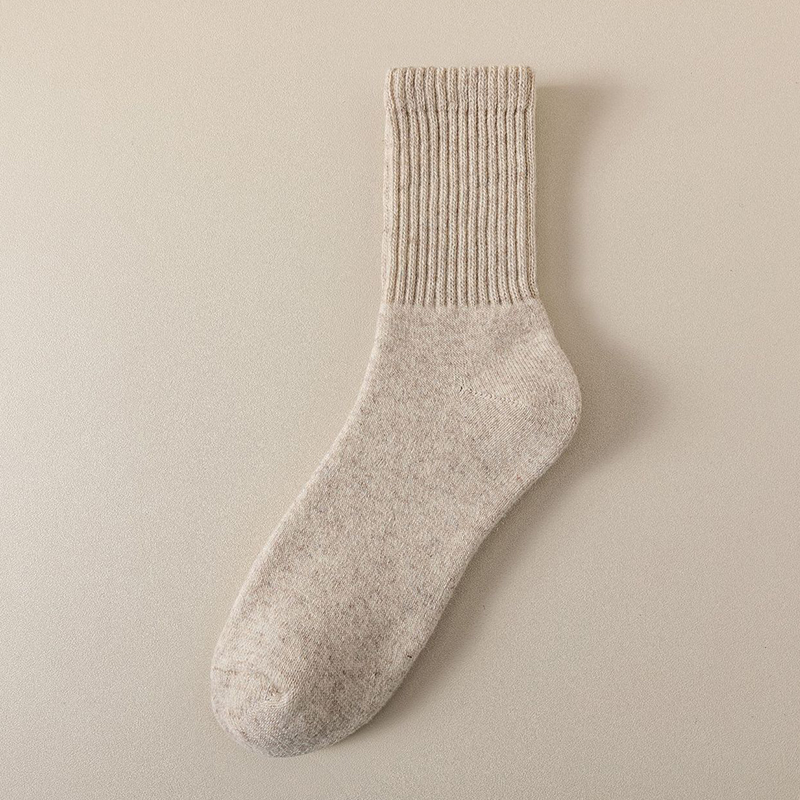 Wholesale Custom Design Warm High Grade Thick Heavy Merino Casual thickened therHaining Wanshida Hosiery Co.,LTD is China wholesale Custom Design Warm High Grade Thick Heavy Merino Casual thickened thermal winter wool...View Product →
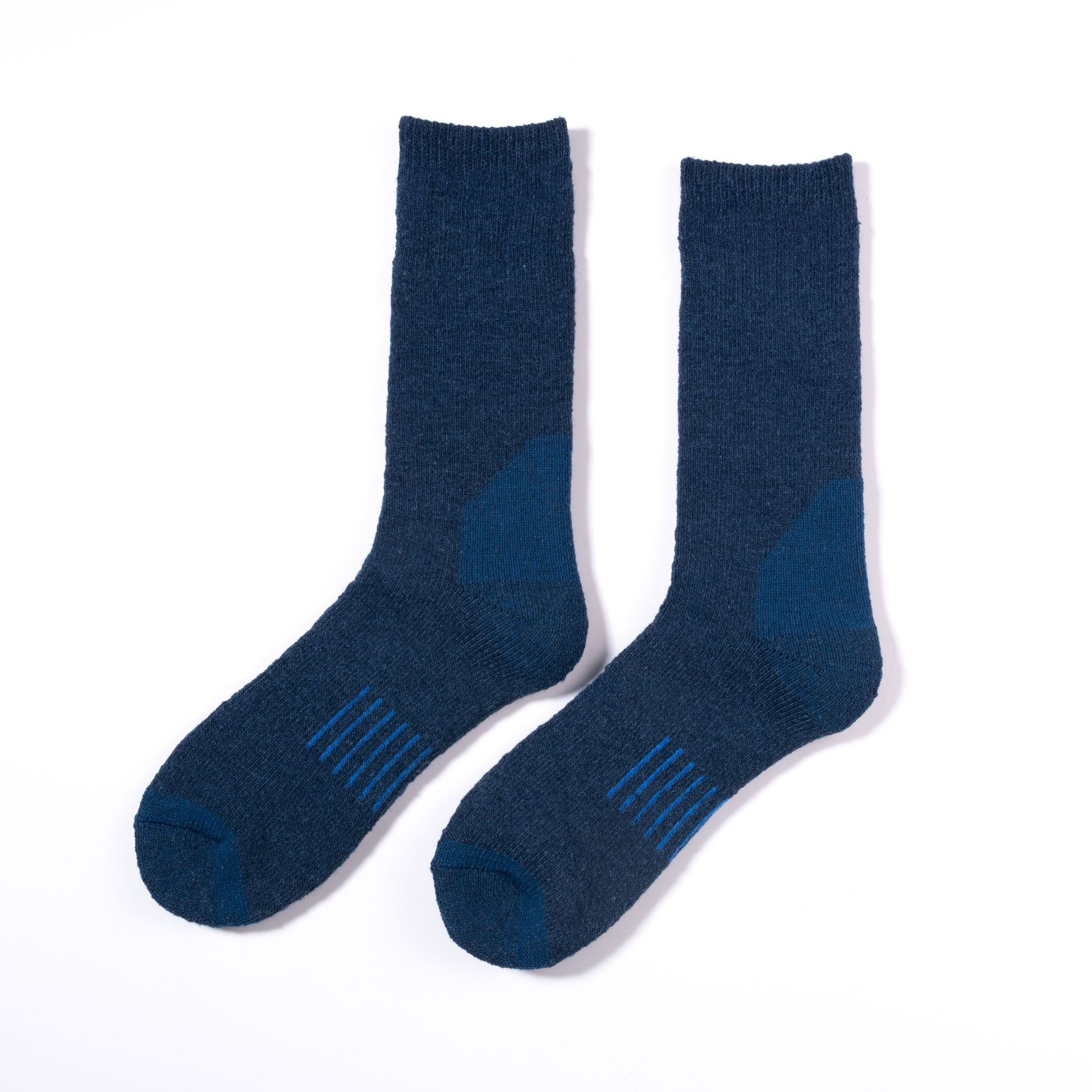 Wholesale Winter outdoor men crew custom logo sports merino wool ski socks SupplHaining Wanshida Hosiery Co.,LTD is China wholesale Winter outdoor men crew custom logo sports merino wool ski socks suppliers,Item No. ...View Product →
Wool running socks last longer when they are washed in cool water and dried away from direct heat. This is not only about the wool; the elastane and nylon can also break down at high temperatures. If you work with a factory, ask for the recommended wash test result and a clear care label. For general longevity, follow the same routine described in our sock washing and care guide.
For a brand, distributor, or running club, the benefits of wool are easy to explain to customers, but the product must be specified correctly. The biggest mistake is ordering “wool socks” without defining the fiber percentage, the weight, and the construction. In practice, we advise buyers to provide three pieces of information: the intended running temperature, the distance profile of the user, and the shoe type. That narrows the choice to a specific weight and cushioning pattern.
A thick knitted wool sock for cold-weather hiking and trail runs works well for a slow trail runner, but a road runner doing speed work would be better served by a lighter midweight blend. If you need custom branding on wool running socks, the same technical decisions apply. You can weave a jacquard design into the sock without adding extra bulk, but the design area, the stitch structure, and the reinforcement zones all affect how the sock feels on the foot. A factory that has experience with running-specific construction, such as the process described in our sock production overview, can help you translate a performance requirement into a manufacturable product.
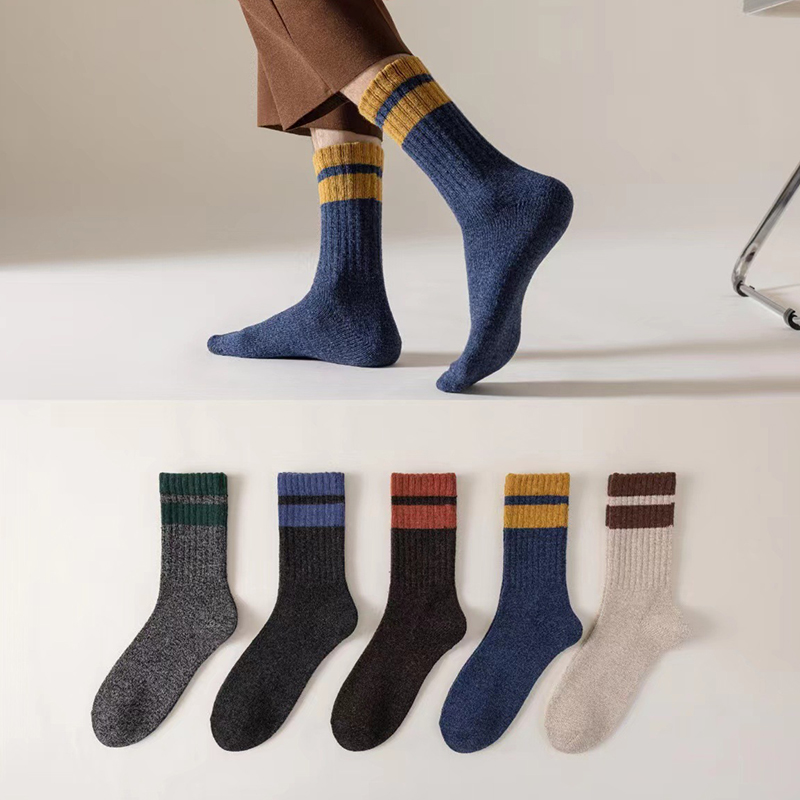 Wholesale Custom Logo Thick Thermal Mens Work Socks Outdoor Running Handmade HikHaining Wanshida Hosiery Co.,LTD is China wholesale Custom Logo Thick Thermal Mens Work Socks Outdoor Running Handmade Hiking Wool Socks ...View Product →
So, are wool socks good for running? Yes, for most runners, most of the time, and particularly in cool or unpredictable weather. The key is to choose a sock with enough merino wool to manage moisture, enough nylon to survive friction, and enough elastane to stay in place. When those three elements are balanced, wool running socks outperform cotton in wet conditions, beat most synthetics on odor control, and keep your feet more comfortable over longer distances.
If you are still on the fence, start with one good pair of midweight merino-blend crew socks and test them on a long run in the same weather conditions that give you the most trouble. The difference is usually clear after one workout. And if you are buying socks for a store, a race kit, or a company uniform, put the wool content and construction on the spec sheet, not just on the label.
NO. WSD1523 Size EU35-39 Age Adu...
View More
NO. WSD1410 Size EU35-39 Age Adu...
View More
NO. WSD1092 Size EU35-39 Age Adu...
View More
NO. WSD1231 Size EU35-39 Age Adu...
View More
NO. WSD1259 Size EU35-39 Age Adu...
View More

+86-13586371153
+86-0573-87670680
[email protected] [email protected]
8-1 Yongsheng Road, Qianjiang Industrial Park, Dingqiao, Haining, Zhejiang, PRC
Copyright © Haining Wanshida Hosiery Co.,LTDAll Rights Reserved. China Custom Socks Manufacturers