
Content
The difference between a no-show sock and a quarter sock is only a few centimeters, but for the person wearing them, those centimeters determine whether a sock disappears into the shoe, peeks out at the ankle bone, or creeps up the lower leg. Between those two extremes sits one of the most requested heights in hosiery production: the ankle sock.
Ankle length is the default for good reasons. It covers the heel and the arch, stays clear of the Achilles tendon, and remains visible enough above a sneaker collar to carry a logo. This guide explains what ankle length really means, how it compares with neighboring lengths, and what to verify before ordering ankle socks in bulk.
An ankle sock is defined by where its top edge lands, not by a universal centimeter figure. On a properly fitted adult sock, the cuff ends at or just below the ankle bone, the lateral malleolus. The fabric covers the heel and the instep, then stops before the tube reaches the point where the leg meets the foot.
In practical terms, the heel-to-cuff measurement for adult ankle styles falls in the 6.5 to 9 cm range, depending on size and brand. Laid flat, men's ankle socks measure about 12 to 14 cm end to end; women's versions run closer to 10 to 12 cm.
The distinction from adjacent lengths is a matter of a couple of centimeters. A sock that rises 3 cm above the ankle bone is a quarter sock. A sock that drops fully below the bone behaves like a no-show and will tend to slide into the shoe. That is why buyers should confirm the sample rather than relying on the name printed on a packaging label.
Ankle length sits between no-show and quarter in the sock sizing scale. Because the physical difference is small, a side-by-side comparison makes the choices clearer.
| Sock length | Top edge position | Typical heel-to-cuff height | Common uses |
|---|---|---|---|
| No-show | Below the ankle bone | 5 to 7 cm | Loafers, boat shoes, low-cut casual shoes |
| Ankle | At or just below the ankle bone | 6.5 to 9 cm | Running shoes, gym, everyday sneakers |
| Quarter | 2 to 4 cm above the ankle bone | 9 to 13 cm | Training, hiking, court sports, boots |
| Crew | Lower third of the calf | 14 to 20 cm | Casual wear, sports, uniforms, boots |
The ankle-to-quarter boundary is the source of most specification errors. If a purchase order calls for ankle but the knitting program adds a few extra rows to the tube, the finished sock lands in quarter territory and changes how it pairs with the intended shoe. By the same logic, a sock cut too low loses the grip that keeps it on the foot.
For a broader view of how each height works with different outfits, read our guide to choosing the right sock length for every occasion.
Ankle socks are the right call whenever you want heel and arch coverage without fabric crowding the lower leg. Three scenarios account for most of the demand we see.
Running and gym training. Running shoes are cut below the ankle bone, which makes ankle socks the natural pairing. They cushion the heel and forefoot, leave the Achilles clear of chafing, and stay put during lateral movement. For gym operators and fitness brands, a pair of custom logo athletic ankle socks for running and training can carry the team or club identity directly on the outer cuff, where other athletes and members see it.
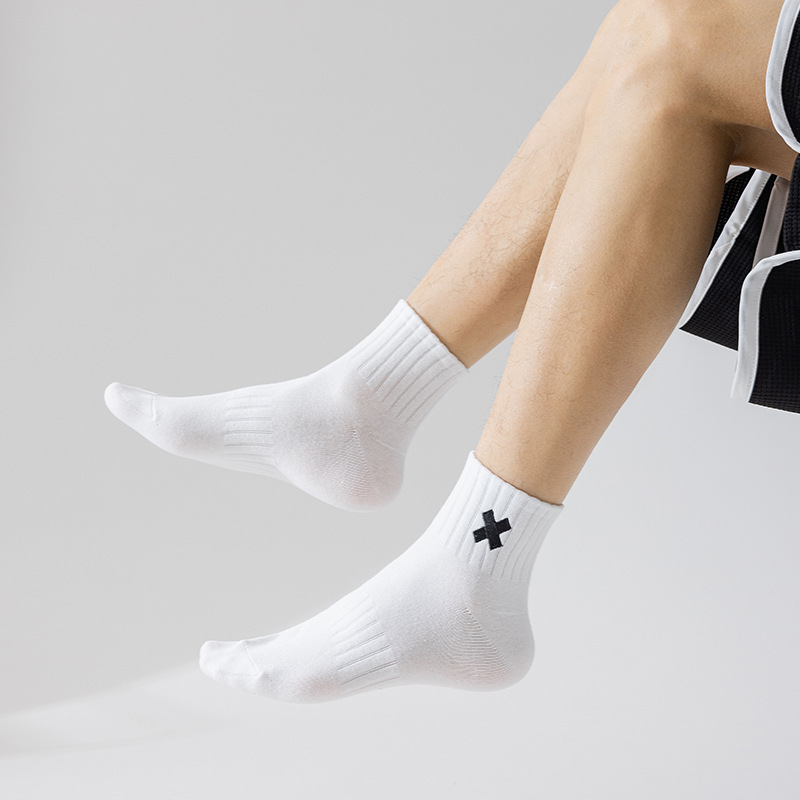 Wholesale short ankle cotton running sneaker sport custom logo embroidery athletHaining Wanshida Hosiery Co.,LTD is China wholesale short ankle cotton running sneaker sport custom logo embroidery athletic socks suppli...View Product →
Everyday wear with low-top shoes. When the shoe top sits below the ankle, the sock appears just above the collar. That small strip of visible fabric is enough to complete the outfit without making the sock the center of attention.
Warm-weather comfort. An ankle sock uses noticeably less fabric than a crew, so it breathes better in summer and sits lighter inside the shoe. Buyers who put together spring and summer ranges usually shift their order mix toward this length for exactly that reason.
Beyond these cases, ankle socks are also a practical blank for custom work. The cuff and the side panel offer enough surface for embroidery or a jacquard pattern without the coverage of a full crew. Studio owners, team managers, and promotional buyers take advantage of that visible area on custom gym ankle socks with your own colors and logo to turn a basic essential into a branded product.
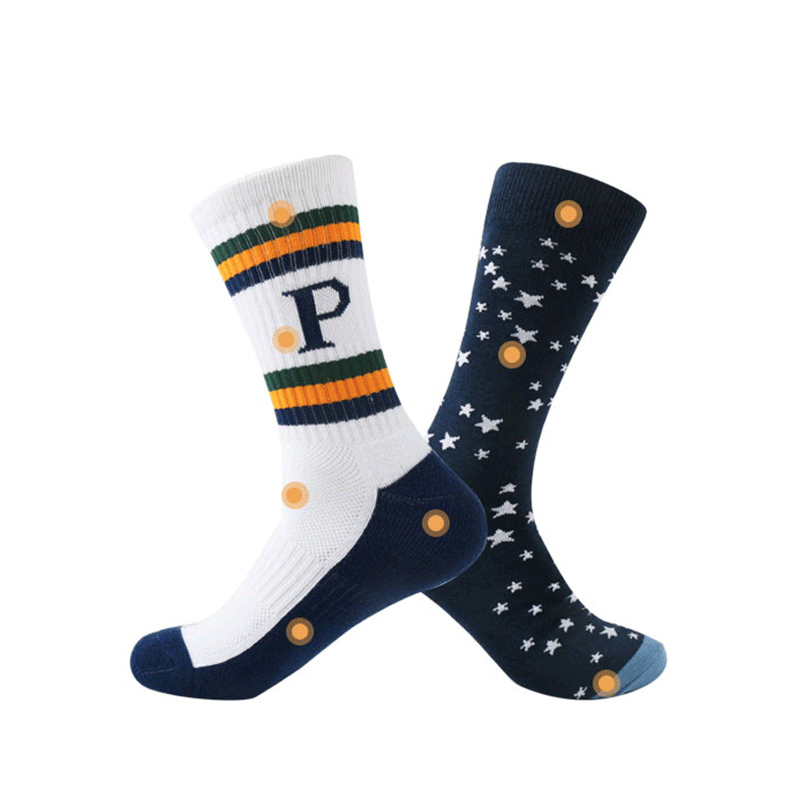 Wholesale Custom White Black Cotton Gym Sport Short Mid Athletic Custom Logo AnkHaining Wanshida Hosiery Co.,LTD is China wholesale Custom White Black Cotton Gym Sport Short Mid Athletic Custom Logo Ankle Socks suppli...View Product →
A named length does not survive contact with a spec sheet without numbers behind it. These are the details we record on every ankle sock order, and they are the same checks a buyer should review before approving a sample.
If you are sourcing multiple heights at once, take a look at the full range of sock lengths available from our production line.
An ankle sock has less fabric to hide construction flaws, so every detail has a bigger impact on fit than it would on a crew sock.
Consider the cuff. A crew sock can compensate for a loose cuff because the tube continues up the calf and creates friction against the leg. An ankle sock has no such advantage. Its cuff must be elastic enough to grip the instep without squeezing, which is why the yarn composition of the top band matters as much as the stitch density of the foot.
The toe seam deserves equal attention. In a snug shoe, a bulky machine seam presses against the toes the entire day. Hand-linked versions, like the construction used in our hand-stitched combed cotton ankle socks for everyday wear, keep the seam flat and barely noticeable while maintaining a smooth finish on the outside.
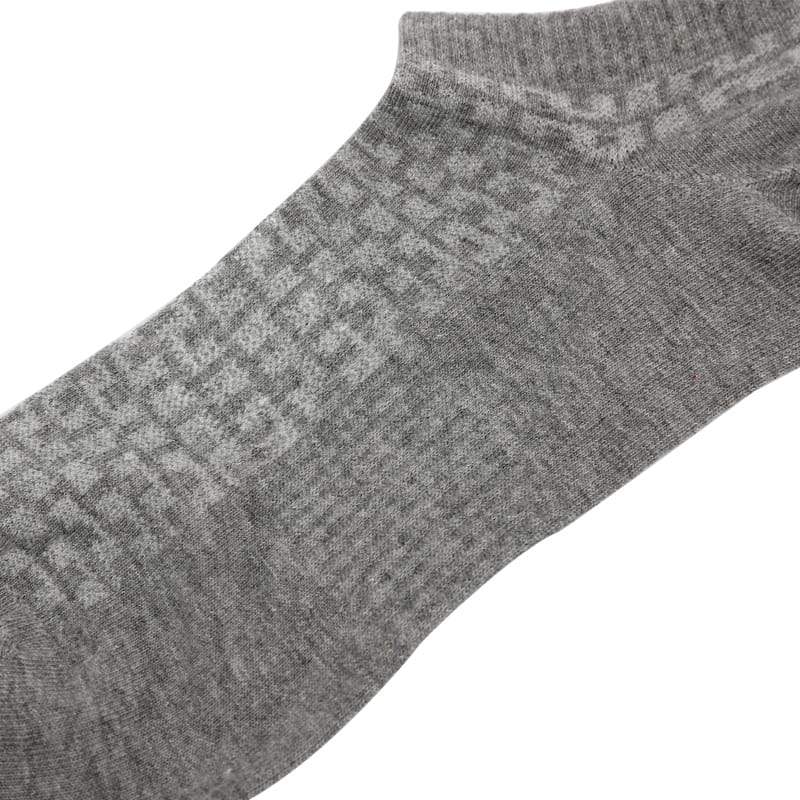 Wholesale Combed cotton plain color hand-stitched men's boat socks Suppliers - HHaining Wanshida Hosiery Co.,LTD is China wholesale Combed cotton plain color hand-stitched men's boat socks suppliers,NO. WSD2302 Size...View Product →
Needle count is the other variable. A 200-needle fine knit produces a thin, smooth fabric for office-low shoes and warm weather. A terry-loop knit, by contrast, adds cushioning that is preferred for sports. The right choice depends on where the sock will be worn, so the material spec should be fixed before any mass production begins.
In our production line, ankle length is confirmed in two steps. First, the sample is placed on a foot form and the top edge is checked against the heel-to-cuff figure on the spec sheet. Then, the laid-flat total length is measured and recorded for incoming inspection. If a batch deviates by more than 0.5 cm from the approved sample, the style is flagged before knitting continues.
That tolerance exists because a few millimeters decide whether the wearer perceives the sock as ankle or quarter. Standardized measurement, not the product name, is what keeps the finished goods consistent across a large order.
Ankle length is the middle option that solves most everyday footwear situations. It covers the cushioning zones that matter, leaves the lower leg free, and provides a practical surface for branding. Before you place an order, get the heel-to-cuff measurement in writing, review the toe seam and cuff elasticity on a physical sample, and keep one sample pair sealed as the baseline for inspection. With those checks in place, ankle socks will perform exactly as described, batch after batch.
NO. WSD1310 Size EU35-39 Age Adu...
View More
NO. WSD1425 Size EU35-39 Age Adu...
View More
NO. WSD1463 Size EU35-39 Age Adu...
View More
NO. WSD1133 Size EU35-39 Age Adu...
View More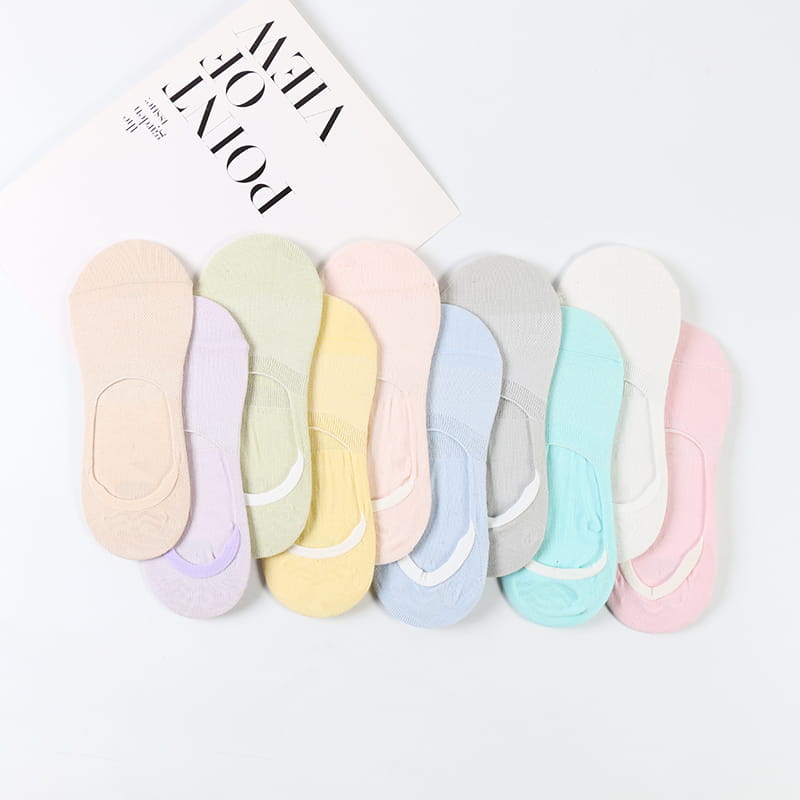
NO. WSD1256 Size EU35-39 Age Adu...
View More

+86-13586371153
+86-0573-87670680
[email protected] [email protected]
8-1 Yongsheng Road, Qianjiang Industrial Park, Dingqiao, Haining, Zhejiang, PRC
Copyright © Haining Wanshida Hosiery Co.,LTDAll Rights Reserved. China Custom Socks Manufacturers