
Content
Few things spoil a long walk faster than a sock that creeps down inside a boot. If you have been searching for sock covers for boots, you are probably trying to solve one of three very practical problems: keeping your feet warm and dry inside a tall or rubber boot, stopping a sock from bunching under the heel, or adding a soft knitted layer over the top of the boot shaft for warmth and style.
We are a sock manufacturer based in Haining, Zhejiang, producing boot socks, knee-high socks and performance socks for brands, importers and online sellers since the 1990s. The questions our customers ask us about boot wear shape the guide below, from fabric choice to the small construction details that decide whether a sock stays up all day.
The phrase is used loosely in retail, so it helps to separate the products before you place an order. In our experience, buyers are looking for one of these three things:
Most custom inquiries we receive fall into the first two groups, and both depend on the same fundamentals: the right height, the right yarn and a cuff that grips without pinching.
Height is the first decision, because a sock that sits too low will slide under the heel counter, and one that sits too high will fold inside a short boot. The table below summarises how we usually match sock length and construction to common boot styles.
| Boot style | Sock height that works | Features worth specifying |
|---|---|---|
| Lace-up ankle and work boots | Ankle to quarter | Terry cushioning at heel and toe, reinforced heel pocket, combed cotton or wool blend |
| Chelsea and casual leather boots | Quarter to crew | Thin profile, fine-gauge knit, smooth hand-linked toe seam |
| Riding, tall fashion and cowboy boots | Knee high to over the knee | Stretch rib, wide calf options, low-bulk cuff, silicone stay-up band |
| Wellington and rubber boots | Knee high welly sock | Looped terry or brushed fleece inner, ribbed cuff that folds over the boot rim |
| Hiking and trekking boots | Crew to mid-calf | Merino wool, full terry cushioning, arch support, flat toe seam |
| Snow and winter boots | Crew to knee high | Thick wool blend, brushed inside, thermal yarn, generous stretch cuff |
For heavy outdoor boots, wool remains the safest choice because it buffers moisture and keeps insulating even when damp. A ribbed cuff of roughly three to five centimetres, knitted with enough spandex to recover after stretching, is what keeps the sock in place when you pull the boot on.
 Fashion Design Trekking Thermal Merino Wool Hiking Mens Stripe Work Boot SocksCotton / spandex / PolyesterView Product →
Inside a boot there is little airflow, so the yarn has to manage moisture and friction on its own. These are the fibres we work with most often for boot-oriented socks.
Two practical warnings from the knitting floor: wool blends with a low twist can pill quickly under boot friction, and all-cotton socks without any elastic fibre will lose their shape around a calf. A small percentage of synthetic fibre usually makes a cotton or wool boot sock last considerably longer.
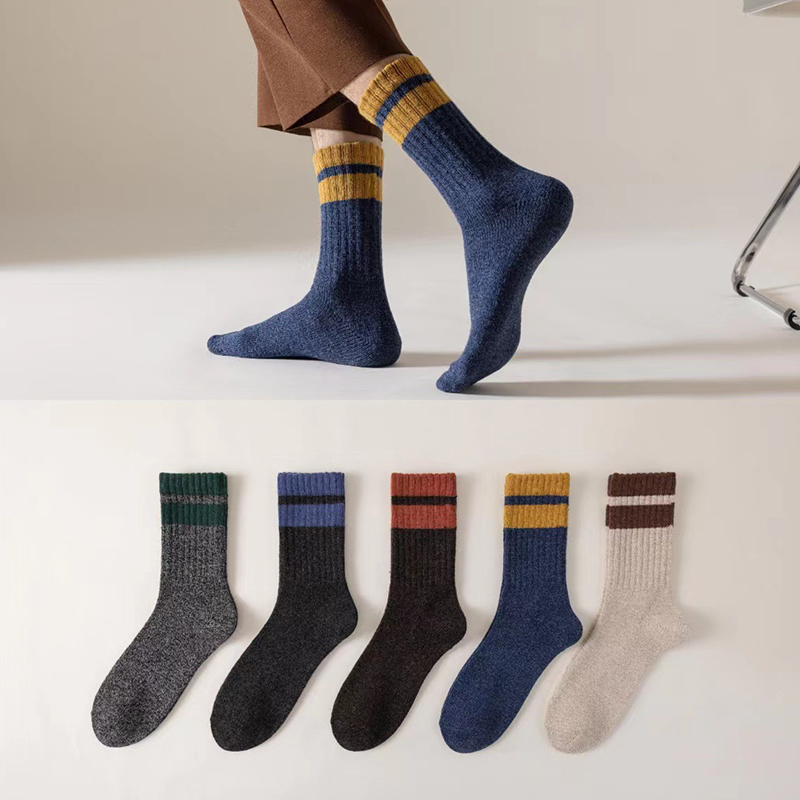 Custom Logo Thick Thermal Mens Work Socks Outdoor Running Handmade Hiking Wool Socks ThickCotton / spandex / PolyesterView Product →
When a buyer sends us a boot sock brief, we walk through the following checklist. Deciding these points early saves sampling rounds later.
Nothing on this list is decorative. Each item changes how the sock behaves after ten minutes inside a boot, which is when most complaints about slipping, rubbing or cold toes appear.
Slipping socks are rarely a yarn problem. They are usually a sizing problem. A sock knitted for a 36 to 40 shoe size will not stay up on a wider calf, and an over-stretched cuff will lose its recovery after a few washes.
For knee-high and over-the-knee boot socks, we recommend measuring calf circumference at the widest point and building graded sizes rather than one universal fit. Plus-size and wide-calf programmes are entirely feasible: the cuff simply needs more stitches and a slightly softer elastic band so it holds without leaving a mark. If you are planning a men's tall boot sock range, this overview of knee-high sock selection points is a useful starting reference for the fit questions retail buyers tend to raise.
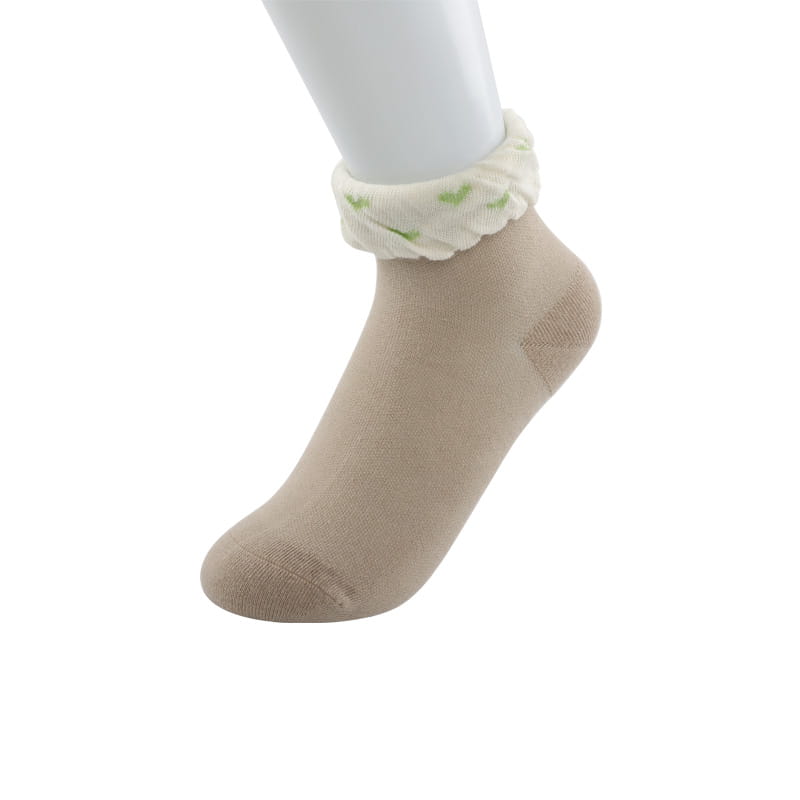
Not every boot sock is hidden. Slouch socks, ribbed cuffs and ruffled boot toppers are worn over the shaft of ankle boots, and they have become a reliable fashion accessory in autumn and winter ranges. These styles are usually knitted in a looser gauge with a soft hand feel, then finished with a relaxed, foldable cuff so the fabric drapes rather than grips.
Popular variants include solid colours for private label basics, jacquard patterns and embroidery for seasonal collections, and tonal ruffle trims for a softer look. Because they sit outside the boot, colour fastness and pilling resistance matter more than cushioning, and a slightly heavier yarn helps the cuff keep its shape after repeated folding.
 Solid color slouch socks women girl ruffle cotton women ribbed socksBlack/pink/yellow/white/purple/light blue/greenView Product →
Our factory in Haining covers more than 10,000 square metres, with over 200 employees, more than 100 computerised knitting machines and 20-plus auxiliary machines, giving an annual capacity above 15 million pairs. Roughly 60 percent of that output is exported to Japan, Australia, New Zealand, the United States and Europe.
For boot sock programmes we support jacquard, embroidery, sublimation printing, silicone anti-slip application and hand-linked toe finishing. The usual route is straightforward: you share a design brief or reference sample, we confirm yarn, gauge and cuff construction, produce a sample for approval, and then move to bulk production. Low minimum order quantities are available on selected styles, which suits brands testing a new boot sock line before committing to a full season. More detail on our machinery, materials and custom workflow can be found on our sock manufacturing homepage.
Retailers who pass on a few care tips tend to see fewer returns. Wool and wool-blend boot socks should be washed inside out in cool water and dried flat, away from direct heat, because tumble drying is the fastest way to shrink a cuff. Cotton and bamboo styles tolerate a gentle machine cycle, though fabric softener should be avoided since it coats the fibre and reduces moisture absorption.
Rarely well. A welly sock needs a foldable, taller cuff and warmer yarn, while a fashion boot sock needs a slimmer profile. Two focused designs usually sell better than one compromise style.
Yes. Knitted boot toppers, slouch socks and leg-warmers are produced on the same circular knitting equipment as our regular socks, with the cuff and yarn adjusted to suit a layered look.
Sock height, target yarn or fibre blend, cuff style, cushioning zones, size range, artwork or logo, and estimated order quantity. The more of this you can share, the faster we can confirm feasibility and sampling.
Sock covers for boots are a small product with a surprisingly long list of decisions behind them: height, yarn, gauge, cuff tension, cushioning and finish. Get those right and the sock disappears into the boot, doing its job quietly. Get them wrong and no amount of branding will rescue the pair.
If you are developing a boot sock or boot topper range for the coming season, send us your brief and we will help you turn it into a sample you can test on real boots before you commit to production.
NO. WSD1072 Size EU35-39 Age Adu...
View More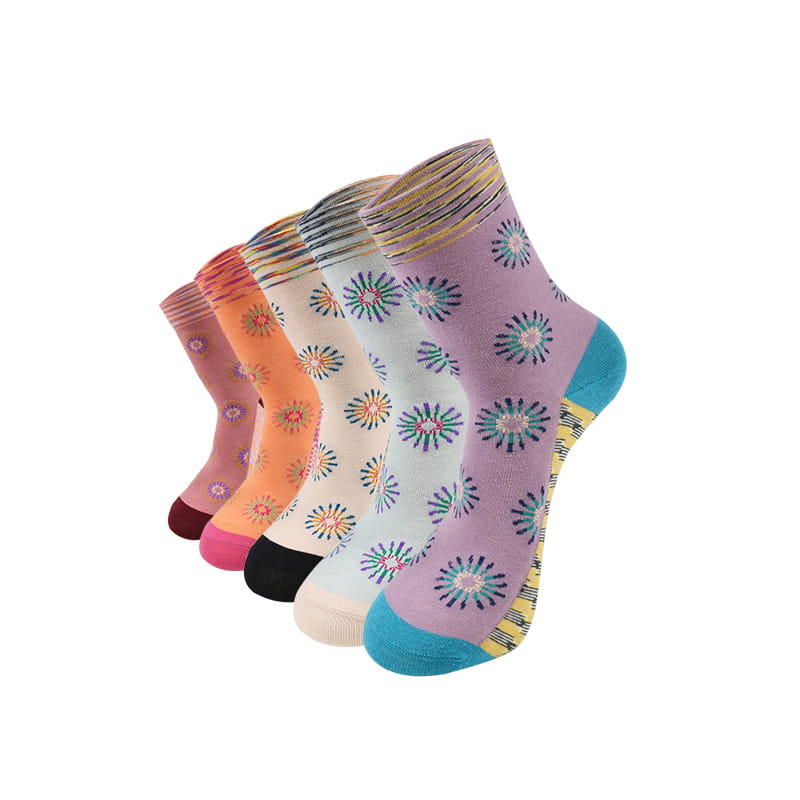
NO. WSD1310 Size EU35-39 Age Adu...
View More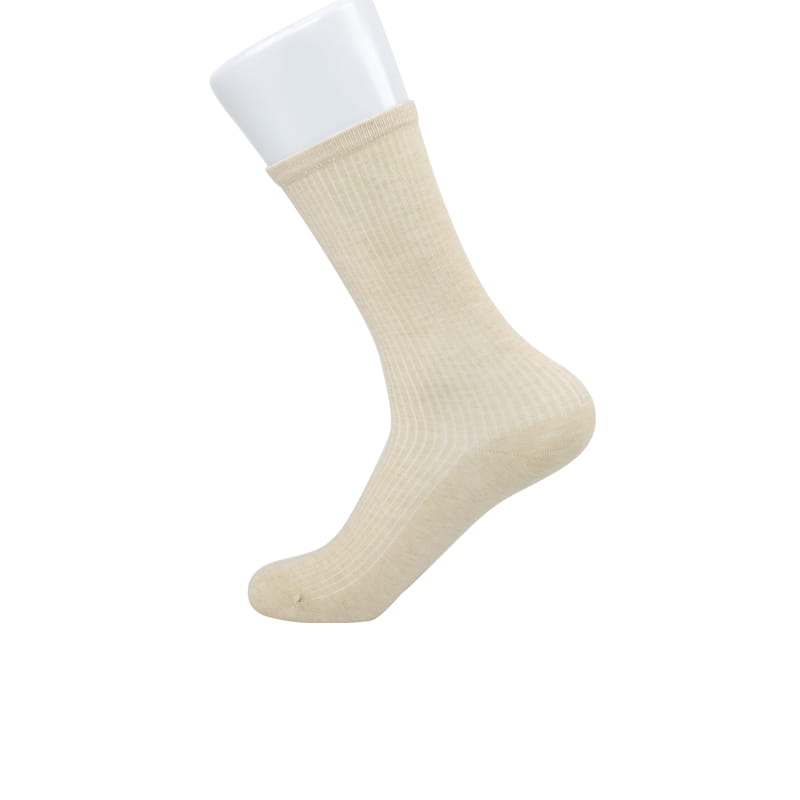
NO. WSD1412 Size EU35-39 Age Adu...
View More
NO. WSD1491 Size EU35-39 Age Adu...
View More
NO. WSD1512 Size EU35-39 Age Adu...
View More
NO. WSD1257 Size EU35-39 Age Adu...
View More

+86-13586371153
+86-0573-87670680
[email protected] [email protected]
8-1 Yongsheng Road, Qianjiang Industrial Park, Dingqiao, Haining, Zhejiang, PRC
Copyright © Haining Wanshida Hosiery Co.,LTDAll Rights Reserved. China Custom Socks Manufacturers